




Testing Mobile Cashier & Reading Fine Print
It is advised for the players to verify if their accounts have gone through the KYC procedure as the casino will conduct its own security audit for the pending withdrawals at the Mobile Cashier. The Mobile Cashier does not send notifications to players about the pending withdrawals. According to the Ricky Casino website, the security audit can take up to 5 business days, and important information that is placed on mobile-optimized sites can be missed easily. Therefore, players need to look for information about the security audit on various pages of the site.
The cashier will process the request right away and mark it as pending. In the testing process, even a regular cashout was marked as pending. After the testing process was completed, the cashier confirmed that the cashout request had been received, however, the customer support reported that the finance department will not process the request until after the weekend.
Until the work is resumed on Monday, the requests for payout will be pending. The time required by the players to make withdrawal varies depending on when the cashout request is made. If it is made during the weekend, the extra check will be performed and the cashout request will be postponed. Players should understand how the timing affects the withdrawal process.
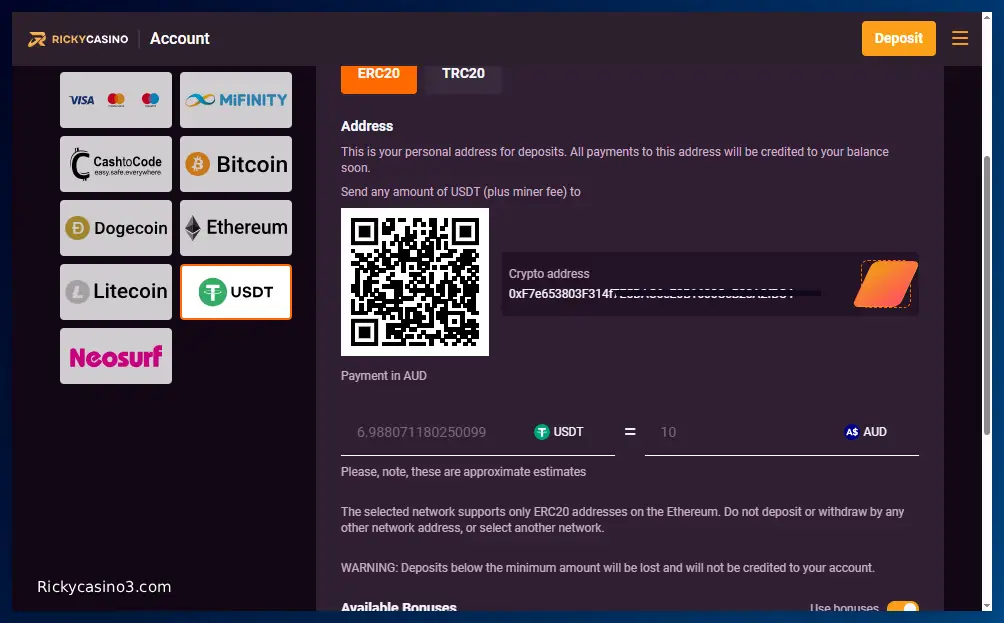
The clerk does not show any sign of urgency in queue dispatch before processing. Buyer beware, there is going to be some difference between 'instant' response and actual processing time.
The request for withdrawal has been raised to the cashier, but it must be understood that it is not going to be instantaneous and it is subject to internal evaluation.
The processing request is going to be subjected to internal check, which may not lead to instant processing due to the processing time at the working hours and/or weekends. The implementation of the TTC process before withdrawing cash will help minimize the waiting time for the user.
Analysis of Withdrawal System on Mobile
Withdrawals from the mobile version of RickyCasino go through the same procedure for verification as a withdrawal from the desktop and do not offer any way to bypass it immediately. Based on our testing of the mobile version, we learned that withdrawals need to be verified according to the common procedure, which could lead to some delays in getting information about the transaction.
At the moment, the delays in verifying the transactions from the mobile application make the mobile withdrawal inconvenient. Even though the mobile version makes it possible to skip several stages, without mentioning the list of cryptocurrencies, their limits, and the way transfers take place in the mobile version, players will have a number of questions related to cryptocurrencies and fiat currency.

Auditing KYC Speed with a $10 Deposit
Checking the verification queue with minimum deposit of $10 has helped to understand that account closure and self-exclusion requests need to be verified first. It means that the time that is necessary for verifying the request would depend on the number of pending requests in the queue.
The verification time of a small amount also depends on the quality of the documents presented as well as on the amount of work associated with the process of verifying the documents. The upgrade of the request for verifying the documents on the dashboard will allow us to make real-time updates and give users control over the process.
In order to avoid any misunderstanding in this regard, the request for account exclusion/closure with pending cashouts and self-exclusion/ closure should include both pending cashouts and KYC information, including the time of the cashout and the balance that the player wants to exclude or close the account.
As far as self-exclusion/temporary account closure is concerned, it is mandatory to inform us about your decision.
The storage period of identity document and transaction data is defined by our privacy policy where different storage periods are applied to different licenses that we receive.
The safety of our clients is always our first priority, and that is why closing an account properly is as important as changing of verification and confirmation.
Auditing Support Response with a $15 Deposit
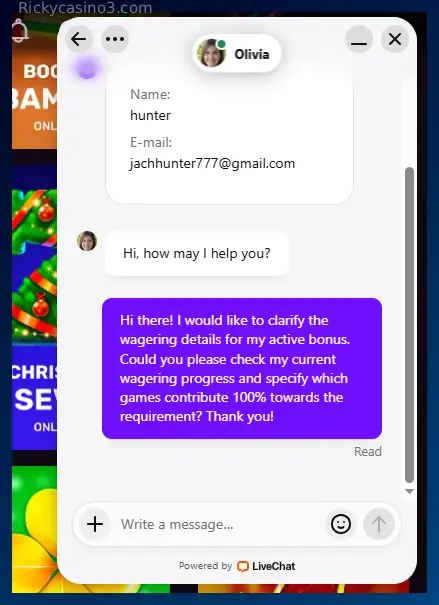 The initial deposit sum of $15 enables clients to test betting and ask the balance questions from the agents of RickyCasino. According to our experience, the agent replied to our questions in about 3 minutes; nevertheless, the time needed to make money withdrawals does not rely on the size of the first deposit.
Despite the fact that the sum of the deposit is not high, the clients might encounter some delays during the periods of peak hours if they have any questions concerning the terms and their balance of money as the service answers to the questions according to the order in which they appeared.
It is important for clients to be aware of the fact that the promotion credits should be played in order to meet the requirements, otherwise, the withdrawal application will be ignored. We would like to advise our clients to keep their documents up-to-date since it will make the process of withdrawal requests much easier.
It becomes possible to calculate the required time to withdraw all funds due to all successful gameplay sessions and account verification.
Nevertheless, the response from the support service requires certain time, but the player has to be prepared for the occurrence when this time may be considerably increased without any warning before. The player should know the limits of withdrawing funds and also should verify his/her account before any deposits.
Stress-Testing Mobile Cashier Performance
Although the desktop version of the cashier is easy to use, tests in the real high traffic environment help understand which aspects need to be considered by the players while using cashier transactions.
In high traffic mobile cashier transactions, delays in withdrawal status may occur. The majority of the systems show such delays when employees carry out verification procedures manually.
In the mobile cashiers, the main system works properly but there may be some delays in support confirmations while verifying transactions via the support.
Regarding UX, high cashier operation time makes withdrawal process longer. Even the usual withdrawal is put into queue, and the players have to understand that withdrawals during weekends would take more time without any immediate processing.
The information about the maximum withdraws amount and VIP member's instructions are contained in the general terms and conditions. We process all cases separately but for verification of transactions manually support is needed. It is the only way to get the definite answer regarding cashier transactions.
Because the cashier mobile system has additional safeguards, managing funds for it requires that you know how to traverse mobile support manually.

Martha Simons
Martha Simons is an experienced freelancer who is well versed with the strategies for developing content in the domain of iGaming journalism, with more than ten years of practical experience in analyzing online gambling platforms. Martha started her career in writing about technology and finance, but then turned towards auditing casinos.